

As a supplier of Concrete Candle Jars, I often get asked the question: "Do concrete candle jars crack easily?" This is a valid concern, especially for those who are considering using these jars for their candles. In this blog post, I'll delve into the factors that influence the cracking of concrete candle jars, share some insights on how to prevent it, and provide some real - world examples to help you make an informed decision.
Understanding the Nature of Concrete
Concrete is a composite material composed of cement, aggregates (such as sand and gravel), and water. When these components are mixed together, a chemical reaction called hydration occurs, which causes the concrete to harden and gain strength over time. However, concrete is also a porous material, which means it can absorb moisture. This property can have both positive and negative impacts on the durability of concrete candle jars.
One of the main reasons why concrete may crack is due to internal stresses. As the concrete dries and cures, it undergoes shrinkage. If this shrinkage is not uniform, it can create internal stresses within the material. When these stresses exceed the tensile strength of the concrete, cracks can form. Another factor is the presence of external forces, such as temperature changes, impacts, or improper handling.
Factors Affecting Cracking in Concrete Candle Jars
1. Quality of Materials
The quality of the materials used in making the concrete candle jars plays a crucial role. Low - quality cement may not have the proper chemical composition to ensure a strong and durable structure. Similarly, using poor - quality aggregates can lead to weak spots in the concrete. At our company, we source high - grade cement and carefully select aggregates to ensure the best possible quality of our Concrete Candle Jars.
2. Mix Design
The ratio of cement, aggregates, and water in the concrete mix is also important. A mix with too much water can result in a weaker concrete that is more prone to cracking. On the other hand, a mix with too little water may not be workable and can also lead to problems during the curing process. Our team of experts has developed an optimized mix design that balances strength, workability, and durability.
3. Curing Process
Proper curing is essential for the long - term durability of concrete. Curing allows the concrete to gain strength and reduces the risk of cracking. If the concrete is not cured correctly, it may dry too quickly, leading to shrinkage cracks. We follow strict curing procedures for our concrete candle jars, ensuring that they are cured in a controlled environment for the optimal period.
4. Temperature and Humidity
Concrete is sensitive to temperature and humidity changes. Extreme temperature fluctuations can cause the concrete to expand and contract, which can lead to cracking. High humidity can also slow down the curing process, while low humidity can cause the concrete to dry too fast. We take these factors into account during the manufacturing process and recommend storing the candles in a stable environment.
5. Candle Use
The way the candles are used in the concrete jars can also affect their integrity. For example, if the candle is burned for too long at a high temperature, it can generate excessive heat, which may cause the concrete to crack. We provide clear instructions to our customers on the appropriate burning time and temperature for candles in our Concrete Candle Containers.
Preventing Cracking in Concrete Candle Jars
1. Choose High - Quality Jars
As a supplier, I always recommend choosing high - quality concrete candle jars from a reputable source. Look for jars that are made with high - grade materials and have been properly cured. Our Cement Candle Vessels are known for their durability and quality.
2. Follow Proper Candle - Burning Guidelines
To prevent cracking due to heat, follow the recommended burning time and temperature for your candles. Avoid burning the candle for long periods without a break, and keep the wick trimmed to a proper length.
3. Store in a Stable Environment
Store your concrete candle jars in a place where the temperature and humidity are relatively stable. Avoid exposing them to extreme heat or cold, as well as direct sunlight.

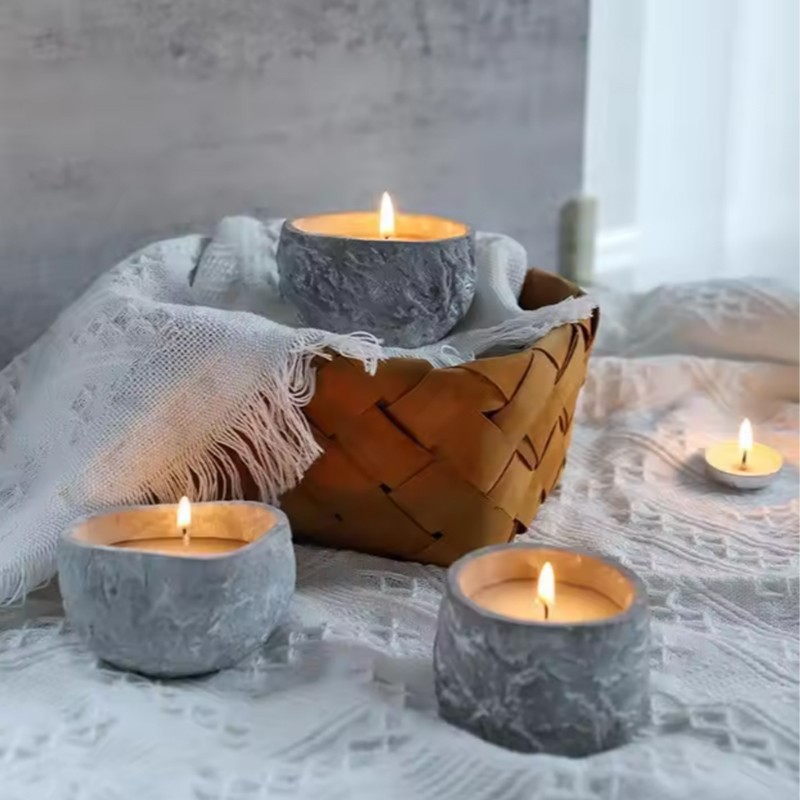
4. Inspect Regularly
Regularly inspect your concrete candle jars for any signs of cracking or damage. If you notice any cracks, stop using the jar immediately to prevent further issues.
Real - World Examples
I've had customers who were initially skeptical about using concrete candle jars due to the fear of cracking. However, after using our products, they were pleasantly surprised by their durability. One customer, a small - scale candle maker, reported that she had been using our concrete candle jars for over a year without any cracking issues. She was able to create beautiful and long - lasting candles that were well - received by her customers.
Another customer, a home decor enthusiast, used our concrete candle jars to decorate her living room. She was worried about the jars cracking during the winter months when the temperature dropped. However, by following our storage and usage guidelines, the jars remained intact and added a unique touch to her decor.
Conclusion
In conclusion, concrete candle jars do not crack easily if they are made with high - quality materials, have a proper mix design, are cured correctly, and are used and stored properly. As a supplier, I am committed to providing the highest - quality Concrete Candle Jars that are durable and reliable.
If you are interested in purchasing our concrete candle jars for your business or personal use, I encourage you to reach out to us for a procurement discussion. We can provide you with more information about our products, pricing, and customization options.
References
- Neville, A. M. (1995). Properties of Concrete. Pearson Education.
- Mindess, S., Young, J. F., & Darwin, D. (2003). Concrete. Prentice Hall.